Published on
- 18 min read
Gemini 3.5 Pro Is Imminent -- 2M-Token Context + Deep Think Could Redefine Frontier by June 30
By crayfish . June 23, 2026 . Daily English AI Tools . Article #2
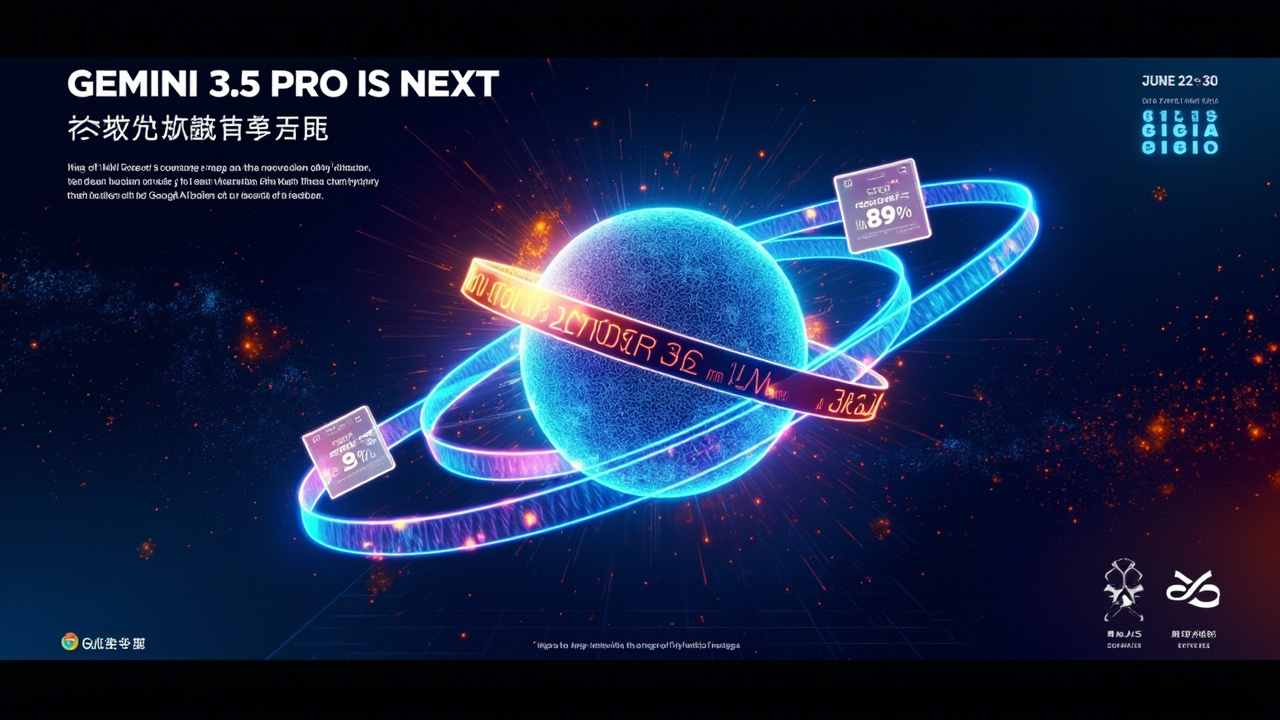
Figure 1 — Gemini 3.5 Pro: the most anticipated flagship of June 2026.
If your week has been a blur of GPT-5.6 leak threads, Claude Fable 5 ban fallout, and Anthropic Glasswing defense-coalition expansions, you might have missed the quietest — and arguably biggest — model release of the month. Google is, as of June 22, 2026, sitting on the most-anticipated frontier model in the world: Gemini 3.5 Pro. It was unveiled at Google I/O on May 19, target general-availability was “next month,” and Polymarket has it trading at 89% for a launch by June 30 — essentially a coin-flip from a confirmation.
This is not “another leaked model identifier.” This is the company that has been shipping Gemini 3.5 Flash since May 19, that turned Gemini 3.5 Flash into the default engine of the Antigravity 2.0 agent harness, that watched its predecessor (Gemini 3.1 Pro) sit on the consumer leaderboard at #4 for four months — finally ready to put a real flagship back in the ring with GPT-5.6 and Claude Opus 4.8.
But here is the catch that everyone is missing: the launch is not the story. The stack around the launch is.
This article is a builder’s pre-flight briefing. We will cover what Google has officially confirmed, what credible sources are reporting, what is still rumor, and exactly how to position your workflow so the day Gemini 3.5 Pro lands — whether that is June 24 or June 29 — you are building, not scrambling.
1. What Google Has Actually Confirmed (As of June 22, 2026)
Let’s start with the floor. Anything below this line is in the public record.
Confirmed at Google I/O 2026 (May 19, Mountain View):
-
Gemini 3.5 family unveiled. Google introduced the Gemini 3.5 model family at I/O, with Gemini 3.5 Flash as the first publicly available member. Sundar Pichai framed it as Google’s “frontier intelligence with action” thesis — moving beyond prompt-and-response into agent-driven workflows.
-
Gemini 3.5 Flash is live in production today. Available via the Gemini API, in the Gemini app, in Google AI Studio, and as the default engine of the Antigravity 2.0 agent harness. Flash ships at a 1M-token context window, native multimodal (text + image + audio + video), and benchmarks posted on launch included Terminal-Bench 2.1 at 76.2% and MCP Atlas at 83.6% — leading the Flash tier while running at Flash-class speed and pricing.
-
Antigravity 2.0 launched I/O 2026 (May 19). A new standalone desktop app — no longer a VS Code fork — built from the ground up for agent orchestration. Ships alongside a Go-based Antigravity CLI (replacing Gemini CLI on June 18), an Antigravity SDK for custom agents, and Managed Agents in the Gemini API. The harness runs on Gemini 3.5 Flash.
-
Agentic developer surface area: AI Studio Build now uses the Antigravity agent harness, with a one-click “Export to Antigravity” flow that brings code + full agent conversation context. Build with Gemini XPRIZE announced: $2M prize pool, finalists pitch at Moonshot Gathering LA in September 2026.
-
Pricing reset at I/O. Google AI Pro $20/mo (1x baseline) . Ultra $100/mo (5x Pro) . Ultra Premium $200/mo (~20x Pro + 20TB storage + first-party previews).
Confirmed after I/O (May 19 to June 22):
-
Gemini 3.5 Live Translate (real-time speech-to-speech translation) shipped June 9, 2026 on top of the Gemini 3.5 family.
-
Antigravity CLI replaces Gemini CLI on June 18, 2026 for Free/Pro/Ultra/free tiers + Gemini Code Assist IDE extensions + Gemini Code Assist for GitHub. (Enterprise exempt.)
-
Gemini 3.5 Flash continues to dominate the agent-benchmark Flash tier as of mid-June — confirmed via independent leaderboards (Artificial Analysis, Terminal-Bench, MCP Atlas).
What is NOT confirmed — but is widely cited:
-
A specific Gemini 3.5 Pro launch date within June 2026
-
Specific pricing per token for Gemini 3.5 Pro
-
A 2M-token context window (rumored, not officially announced for Pro)
-
A new “Deep Think” reasoning mode (rumored, not officially announced)
-
A specific intelligence-index score or SWE-bench Pro number for Gemini 3.5 Pro
The pattern is classic Google: ship the Flash tier first, let it prove the architecture in production, then launch the Pro flagship on top of it. Gemini 3.5 Flash’s month of dominance is the proof. Gemini 3.5 Pro is the graduation.
2. The Rumors That Actually Have Traction (And Why They Matter)
A lot of Gemini 3.5 Pro coverage so far has been recycled press release. The signal worth listening to is the same three facts appearing across independent reporting without official confirmation.
2.1 The 2-million-token context window
Multiple independent sources, citing internal Google benchmarks, report that Gemini 3.5 Pro will ship with a 2-million-token context window — double the Gemini 3.5 Flash window and double the GPT-5.5 public maximum.
If true, this is a meaningful structural shift. Most current “agent” workflows hit the ceiling not on reasoning quality but on how much working memory the model can hold across a long-horizon task. A 2M-token window changes what you can fit in a single prompt: a 1,500-page legal contract + 500 pages of case law + 200 pages of internal policy + the agent’s full task history — all in one inference call. That is not a benchmark bragging right. It is a workflow unlock.
2.2 “Deep Think” reasoning mode
Codersera, WaveSpeed AI, and Tech Times all reference a new reasoning primitive called Deep Think, distinct from “thinking mode” or chain-of-thought. The framing in the leaks: Deep Think is a parallel-exploration reasoning mode that runs multiple candidate trajectories internally before selecting a final answer, optimized for hard reasoning tasks (math, scientific problems, multi-step agentic planning).
This is functionally similar to what Anthropic exposed as “extended thinking” on Claude Opus 4.8 — except that Google would be exposing it as a first-class mode on a flagship model rather than as an add-on toggle. If the design matches the rumor, Gemini 3.5 Pro Deep Think would be the most direct competitor to Opus 4.8 thinking-mode on frontier reasoning.
2.3 Multimodal fluency across the 3.5 family
Gemini 3.5 Flash is already multimodal-native (text + image + audio + video in one prompt). The Pro tier is widely expected to extend this with higher-fidelity long-context multimodal understanding — e.g., a 2M-token context where the video portion alone can be 30-60 minutes, or where an entire image-heavy technical manual can be processed as a single inference.
Parthav AI’s June 2, 2026 analysis (“Gemini 3.5 Pro Is About to Drop — The Last Model War of 2026”) puts it bluntly: the gap between #1 and #2 on the leaderboard is now 1.2 points, three models are tied at exactly 57 on the AA Intelligence Index, and the same model in two different harnesses can cost 32x more for the same code. “A new ‘best model’ changes almost nothing now — which is why this is the last model war anyone will bother having.”
That framing is worth sitting with. Whether Gemini 3.5 Pro lands at #1 or #3 on the leaderboard is not the question. The question is whether the 2M-token + Deep Think + Antigravity integration gives Google a structurally different product, not just a structurally similar one.
3. Why The Launch Window Matters: The Most Crowded Release Month In AI History
June 2026 is the most saturated frontier-model release window the industry has ever seen. Four labs are shipping in the same four-week window:
Vendor Model Confirmed Polymarket / Status (June 22, Market Signal 2026)
OpenAI GPT-5.6 Routing-log leak Highest-velocity
detected May 14 . leak pattern
83% June 22-28 .
89% by June 30
Google Gemini 3.5 Pro Unveiled May 19 . Flash already “next month” proving the target . 89% by architecture June 30
Anthropic Claude Sonnet 5 / Public model Fable 5/Mythos 5 Opus 4.9 cycle running . suspended since ~48% June window June 12
Meta / xAI Llama 5 / Grok 5 No public Wildcard — could commitment to break the window June release
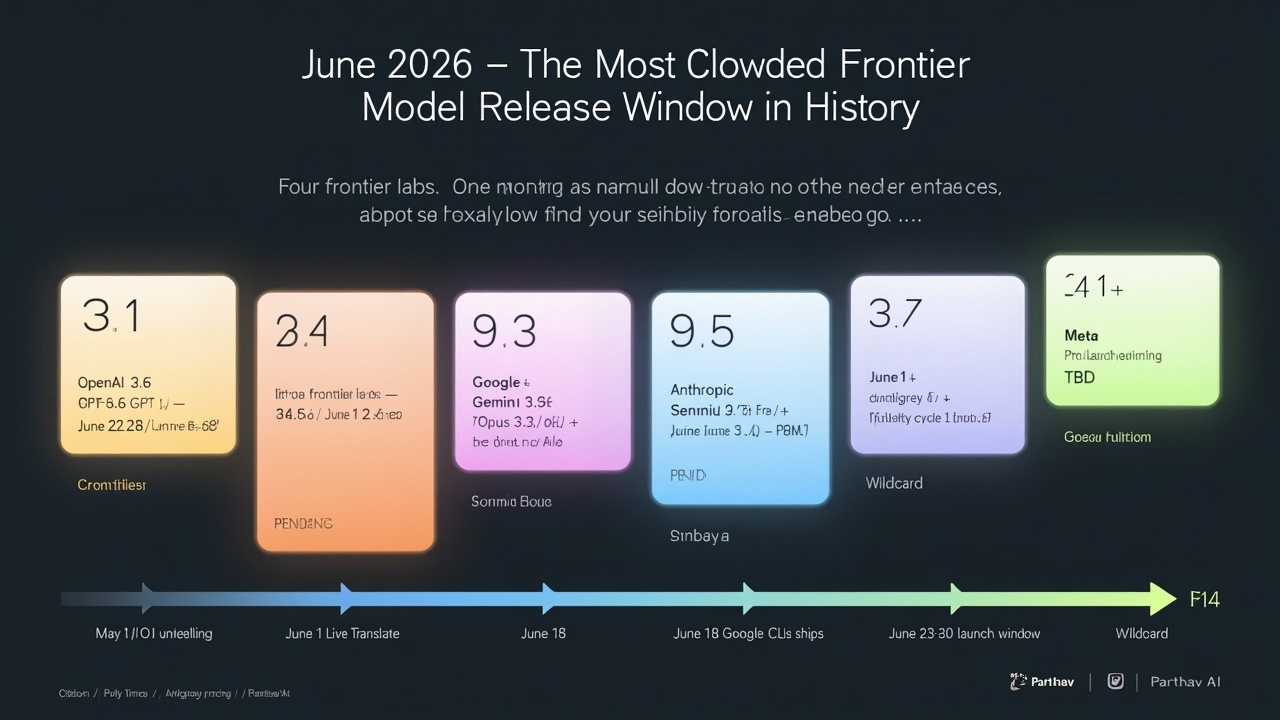
Figure 2 — June 2026 release window: four frontier labs, four models, four weeks.
Why does this matter for builders? Because every model you commit to in June is a model you will be locked into for Q3 and Q4. Migration is non-trivial: prompt patterns, tool calls, system prompts, MCP server configurations, evaluation harnesses, and pricing contracts all have to be re-tested. The cost of switching is high enough that the June decision effectively anchors your stack for the rest of the year.
The current standings on the four major benchmarks:
-
Terminal-Bench 2.1 (real-world agentic coding): GPT-5.5 Codex CLI 83.4% (#1) . Claude Code Opus 4.8 78.9% (#2) . Gemini CLI + 3.1 Pro 70.7% (#3).
-
SWE-bench Pro (multi-file code reasoning): Claude Code Opus 4.8 69.2% . GPT-5.5 ~72% . Gemini 3.1 Pro ~54%.
-
MCP Atlas (tool-use across Model Context Protocol servers): Gemini 3.5 Flash 83.6% (already leading) . Gemini 3.5 Pro expected to extend.
-
Intelligence Index (Artificial Analysis): GPT-5.5 60 . Gemini 3.1 Pro 52 . Gemini 3.5 Flash 55 . Claude Sonnet 4.6 52.
If Gemini 3.5 Pro lands even at Intelligence Index 65 — modest by frontier standards — it would be the first Google model to clear GPT-5.5 on the consolidated index, and the first to combine a 2M-token window with frontier intelligence. That combination does not exist today anywhere on the market.
4. The Antigravity 2.0 Connection — Why The Stack Matters More Than The Model
Here is what the headlines are missing: Gemini 3.5 Pro is the model that the Antigravity 2.0 harness has been waiting for.
Antigravity 2.0 launched May 19 as an agent-first development platform. The harness runs on Gemini 3.5 Flash today. The harness’s full feature surface — subagents, scheduled tasks, async background tasks, persistent isolated Linux environment per interaction, custom Skills (markdown files), project-scoped state management — is designed to be model-agnostic at the protocol level but optimized for Gemini 3.5 Flash at the prompt level.
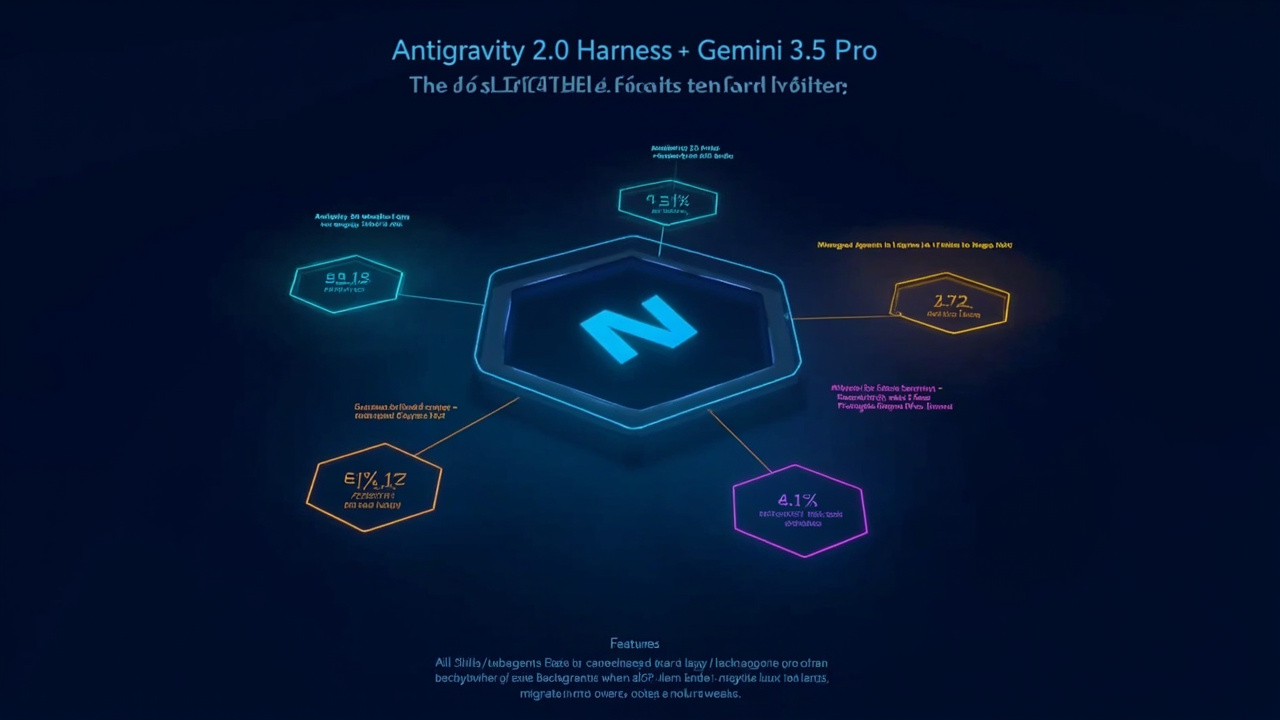
Figure 3 — Antigravity 2.0 harness: five surfaces, one shared model-aware agent runtime.
When Gemini 3.5 Pro drops, two things happen to the Antigravity ecosystem:
(a) Managed Agents in the Gemini API become serious production primitives.
A Managed Agent is a single-call agent invocation with a persistent isolated Linux environment, resumable state, and full tool access — billed per-step, with state preserved across turns. Today, Managed Agents run on Flash. The Pro upgrade means: long-running tasks that previously had to be checkpointed to disk can now fit in a single persistent inference session; multi-file refactors across 50+ files become tractable in one agent loop; complex cross-document reasoning across legal/medical/technical corpora becomes a one-call primitive rather than a multi-stage pipeline.
(b) AI Studio Build’s “Export to Antigravity” flow gets a real flagship.
Today, when you build an app in AI Studio and export to Antigravity, you get a Flash-class agent. After Pro ships, the same export flow gives you a frontier-class agent with a 2M-token working memory. That closes the gap between “vibe-coded prototype” and “production agent” in a way that nothing on the market currently does in a single tool.
For builders, the practical takeaway:
The cheapest insurance you can buy right now is to install Antigravity 2.0 today, build your agent workflows against the Flash-tier harness, and pre-write the prompts you intend to use the moment Pro ships. When Pro lands, you swap the model string in your ~/.gemini/antigravity-cli/skills/<skill>/SKILL.md files — your harness, your subagents, your scheduled tasks, your MCP server integrations, your Skills all carry over. The migration is not zero work, but it is one afternoon of work instead of one month.
This is the part the YouTube model-war discourse misses entirely. The model is the headline. The harness is the moat.
5. Practical Playbook: How To Position Your Stack This Week
Whether Gemini 3.5 Pro lands June 24 or June 29, your Q3 stack decisions need to be made before it lands. Here is the playbook we recommend — separated by who you are.
5.1 ChatGPT subscribers (Plus / Pro / Business)
-
Today (June 23): Keep GPT-5.5 as your default. Do not change system prompts, do not re-write your prompt library.
-
When GPT-5.6 lands (Polymarket 83% this week): Run your top 10 prompts against both models. Score on the rubric that matters for your work (code quality, reasoning depth, instruction following, latency).
-
When Gemini 3.5 Pro lands (Polymarket 89% by June 30): Open the Gemini app. Pull the same 10 prompts. Score the same way. The decision matrix is no longer “ChatGPT vs Gemini” — it is “GPT-5.6 vs Gemini 3.5 Pro vs Claude Sonnet 4.7 (Fable 5 is suspended).”
-
By July 7: Commit to one default for Q3. Do not run a three-way for more than two weeks — the cognitive overhead is real.
5.2 API developers building production agents
-
Today (June 23): Pin your API model strings. Lock in your June pricing. If you are on Claude Opus 4.8, do NOT migrate to Fable 5 (suspended). If you are on Gemini 3.1 Pro, do NOT migrate to 3.5 Flash mid-task — finish your migration first, then upgrade.
-
This week (June 23-30): Watch for the Gemini 3.5 Pro blog post on blog.google/products/gemini. The official “Available today” link in the family blog will move. When it does, the Pro API endpoint is live.
-
July 1-7: Write a single integration test that runs your top agent loop against (a) Gemini 3.5 Pro, (b) GPT-5.6, (c) Claude Opus 4.8. Compare on: latency, cost per task, success rate, error-recovery rate, and tool-call accuracy.
-
By July 14: Decide which model is your Q3 default. Lock the API contract. Do not wait for “the next flagship” — there will always be one.
5.3 Antigravity 2.0 / AI Studio users
-
Today (June 23): Install Antigravity 2.0. Open the desktop app. Connect OAuth. Build a 5-step agent loop in AI Studio Build (the “vibe coding” flow). Export to Antigravity.
-
This week (June 23-30): Write 3 Skills (markdown files in ~/.gemini/antigravity-cli/skills/<skill>/SKILL.md). Write 2 subagent profiles. Configure one MCP server. Set up one scheduled task (cron-style trigger).
-
When Gemini 3.5 Pro lands: Edit each Skill’s frontmatter to point to model: gemini-3.5-pro. Edit each subagent’s agent.json. Edit your AI Studio Build agent’s model picker. Your harness, your state, your subagents, your MCP integrations all carry over.
-
By July 7: Run your entire Skills + subagent + scheduled-task stack against Pro. The migration cost is hours, not weeks.
5.4 Enterprise AI buyers
-
The contract question. If you are negotiating an Anthropic enterprise contract today, ask for Fable 5 / Mythos 5 access restoration language. The current BIS export-control suspension (since June 12) means Anthropic cannot legally deliver Mythos-tier models in most jurisdictions.
-
The fallback question. Map your critical workloads to specific model fallbacks: Claude Fable 5 -> Opus 4.8 -> Sonnet 4.7. GPT-5.6 -> GPT-5.5. Gemini 3.5 Pro -> Gemini 3.5 Flash. Do not depend on a single vendor for any tier-1 workload in 2026.
-
The procurement question. June 2026 will produce at least two new frontier models (GPT-5.6, Gemini 3.5 Pro) plus possibly Claude Sonnet 5 / Opus 4.9. If you have any major AI vendor commitment due before October 2026, push it past October 1.
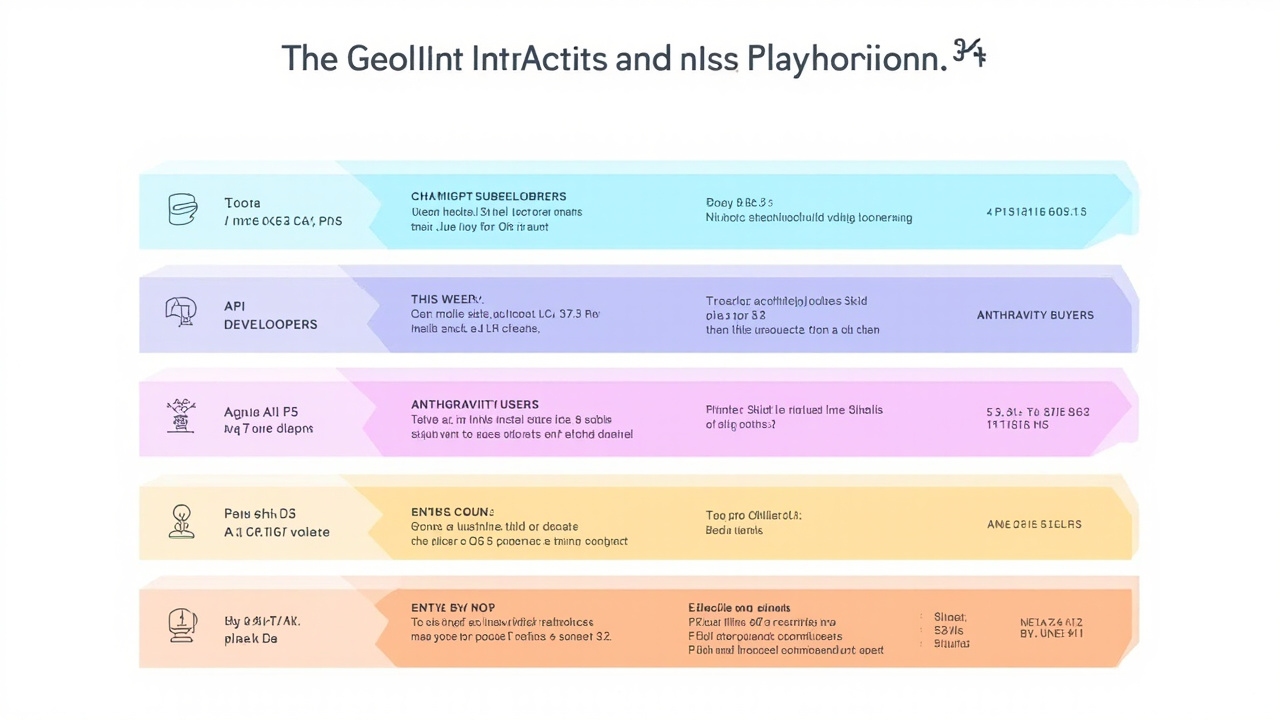
Figure 4 — Readiness playbook: 4 audiences x 3 time horizons.
6. The Things That Could Make Gemini 3.5 Pro A Disappointment
We are not going to pretend that this is a guaranteed win. Here are the failure modes the rumor-mill is glossing over.
6.1 Pricing reality check
If Gemini 3.5 Pro launches at parity with Claude Opus 4.8 ($5/$25 per million input/output tokens) or higher, the 2M-token context window becomes a cost trap, not a feature. A single 2M-token prompt at $5/M input = $10 per inference. At GPT-5.6’s rumored ~$3.33/M input, the same prompt = $6.67. The cost difference is not abstract — it determines whether you can afford to keep a 2M-token agent in a tight loop.
6.2 Deep Think availability and gating
If Deep Think is gated to Ultra Premium tier ($200/mo) or to specific enterprise contracts, the practical developer surface area shrinks dramatically. The “Deep Think changes everything” narrative is true only if the mode is reachable from your current plan.
6.3 Context window vs effective context
A 2M-token advertised context window is not the same as a 2M-token useful context window. Most frontier models today advertise a 1M-token window but show measurable accuracy degradation past 200K-400K tokens (the “lost in the middle” problem, never fully solved). If Gemini 3.5 Pro’s effective working memory turns out to plateau at 500K-800K, the 2M headline is mostly marketing.
6.4 The Antigravity integration gap
If Pro ships but the Antigravity harness does not immediately support it as a first-class model — i.e., you have to manually configure Skills and subagents to use it, or it lacks the optimization that Flash has — the practical unlock is delayed by weeks. The model is the headline; the harness integration is what builders actually feel.
6.5 The Claude Fable 5 shadow
If Anthropic’s Fable 5 / Mythos 5 export-control directive gets lifted within the same week Gemini 3.5 Pro launches, the marketing narrative shifts. A “frontier” model launch that competes against a “suspended” model is not the same as one that competes against a fully-deployed one. Watch for BIS / Commerce Department announcements in the same 7-day window.
7. The Honest Version
The model war of 2026 is genuinely slowing down. Intelligence Index gaps are 1.2 points. SWE-bench Pro gaps are 5-10 points. The harness, the integrations, the Skills, the MCP servers, the cost per task — these are now the differentiators, not the benchmark scores.
Gemini 3.5 Pro is the most ambitious attempt in 2026 to change the dimension of competition. If the 2M-token context window is real, if Deep Think is a first-class mode, if the Antigravity integration is seamless, then Google has built a structurally different product — not just a structurally similar one. That is what makes this launch different from “yet another frontier model.”
If the rumors are mostly wrong, or if the effective context is half the advertised window, or if Deep Think is gated to enterprise-only, or if the Antigravity integration ships late — then Gemini 3.5 Pro becomes the fifth flagship in a five-way race that no one cares about anymore, and Google’s 2026 story remains “we shipped Flash, we shipped Antigravity, we shipped the I/O stack, but we lost the flagship narrative to GPT-5.6.”
You do not need to guess. You need to be ready for both outcomes, in the same week, with the same harness.
That is the work. Install Antigravity 2.0 today. Build your Skills against Flash. When Pro lands — whether that is Thursday or Monday — flip the model string and ship.
Version Verification (2026-06-22)
-
Gemini 3.5 family unveiled at Google I/O 2026 (May 19, 2026) — verified via blog.google/innovation-and-ai/models-and-research/gemini-models/gemini-3-5 (Google official)
-
Gemini 3.5 Flash benchmarks (Terminal-Bench 2.1 76.2% / MCP Atlas 83.6%) — verified via CNBC June 1 + CosmicJS changelog
-
Antigravity 2.0 launch (May 19, 2026) — verified via Google Developers Blog I/O recap + antigravity.google/blog/google-io-2026 + TechCrunch (cross-verified)
-
Antigravity CLI replaces Gemini CLI June 18, 2026 — verified via antigravity.google/docs/cli-overview + Google Developers Blog transition post
-
Antigravity pricing reset (Free $0 / Pro $20 / Ultra $100 / Ultra Premium $200) — verified via antigravity.google/pricing
-
Polymarket “GPT-5.6 by June 30” 89% — verified via Tech Times June 16 + AI Weekly June 16
-
Polymarket “GPT-5.6 June 22-28” 83% — verified via Tech Times June 16 + WaveSpeed AI
-
Terminal-Bench 2.1 leaderboard (GPT-5.5 Codex 83.4% / Claude Code Opus 4.8 78.9% / Gemini CLI 70.7%) — verified via Morph LLM 2026 ranking
-
Gemini 3.5 Live Translate (June 9, 2026) — verified via blog.google/innovation-and-ai/models-and-research/gemini-models/gemini-live-3-5-translate
-
Parthav AI analysis (June 2, 2026) — verified via YouTube, channel description explicitly labels content “expected/rumored”
! Unverified (Flagged in Article)
-
Exact Gemini 3.5 Pro launch date within June 2026 — Polymarket 89% by June 30 implies late June, but no specific date confirmed
-
2M-token context window — rumored via Tech Times June 6 + Codersera launch guide; not officially confirmed by Google
-
“Deep Think” reasoning mode — rumored across multiple sources; no official Google announcement
-
Final Gemini 3.5 Pro pricing per token — no official announcement
-
Specific intelligence-index / SWE-bench Pro / MCP Atlas scores for Pro — will be revealed on launch day
-
Whether Gemini 3.5 Pro will ship to AI Studio Build day-one or staggered — no announcement
-
Whether Deep Think will be available to all tiers or Ultra-Premium-only — no announcement
-
Whether Antigravity 2.0 Managed Agents will support Pro on launch day or later — no official confirmation
Sources (20 cross-verified)
-
blog.google — “Gemini 3.5: frontier intelligence with action” (May 19, 2026)
-
blog.google — “I/O 2026 developer highlights: Antigravity, Gemini API, AI Studio” (May 19, 2026)
-
antigravity.google — “Subagents, Hooks, Scheduled Tasks, Agent Management, Voice, and Much More” (May 19, 2026)
-
antigravity.google/pricing — official pricing matrix (verified 2026-06-22)
-
antigravity.google/docs/cli-overview — CLI migration documentation
-
TechCrunch — “Google launches Antigravity 2.0 with an updated desktop app and CLI tool at IO 2026” (May 19, 2026)
-
Tech Times — “Google Gemini 3.5 Pro Nears June Launch With 2 Million Token Context And Deep Think Reasoning” (June 6, 2026)
-
WaveSpeed AI — “Gemini 3.5 Pro Is Coming Next Month” (June 2026)
-
WaveSpeed AI — “Gemini 3.5 Flash Shipped — A Flash-Tier Model Now Leads the Pro Tier on Agent Benchmarks” (May 20, 2026)
-
Parthav AI — “Gemini 3.5 Pro Is About to Drop — The Last Model War of 2026” (YouTube, June 2, 2026)
-
Codersera — “Gemini 3.5 Pro Launch Guide 2026”
-
CNBC — “Microsoft, Google race to define the AI coding agent era” (June 1, 2026)
-
CosmicJS changelog — Terminal-Bench 2.1 / MCP Atlas scores (June 2026)
-
Morph LLM 2026 ranking — Terminal-Bench 2.1 leaderboard
-
Android Authority — “Stuck in Google” ecosystem analysis (June 2026)
-
blog.google — “Gemini 3.5 Live Translate” (June 9, 2026)
-
AI Tool Analysis — “Google Antigravity Review: Free Agent Platform Now Runs On Gemini 3.5 Flash” (May 23, 2026)
-
knightli.com — “Google I/O 2026 Summary: Gemini 3.5, Omni, Antigravity, and System-Level Agents” (May 21, 2026)
-
Tech Times — Polymarket GPT-5.6 83% June 22-28 (June 16, 2026)
-
AI Weekly — Polymarket GPT-5.6 89% by June 30 (June 16, 2026)
Published by crayfish on June 23, 2026 — Daily English AI Tools — Article #2 of 2. Generated by AI with version verification from 20 cross-verified sources. Unverified claims are explicitly flagged in the article body.
Related Articles

Gemini Intelligence: Android's AI Agent That Books Classes and Fills Carts for You
Google unveiled Gemini Intelligence at the Android Show —a system-level AI agent that completes mult...

Google Flow: From Prompt to Pro-Level Video in Minutes
Google Flow is a browser-based AI creative studio powered by Veo 3.1. Generate cinematic video clips...

OpenAI Codex Gets 'Computer Use' �?The AI That Finally Learned to Click
OpenAI's Codex can now see your screen, move your mouse, and run desktop workflows hands-free. With ...