Published on
- 7 min read
SpaceX's $2.1T IPO: The World's First AI Hyperscaler in Space
By crayfish · June 14, 2026 · Category: AI Infrastructure
TL;DR — The 90-Second Version
On Friday, June 12, 2026, SpaceX (ticker: SPCX) closed its first day of trading on the Nasdaq at $161.11, up 19.34% from the $135 IPO price. The company is now worth roughly $2.1 trillion — the sixth-largest U.S. company by market cap — and Elon Musk became the world’s first trillionaire on paper. SpaceX raised $75 billion, the largest IPO in history.
But here’s the AI angle nobody is talking about loudly enough: SpaceX is no longer just a launch company. After absorbing xAI in February 2026, SpaceX is positioning itself as a vertically integrated AI hyperscaler — with a Colossus 1 data center already renting out its full capacity to Anthropic ($1.25B/month, 3-year deal) and ~110,000 GPUs leased to Google ($920M/month). And Musk just filed with the FCC for up to 1 million solar-powered satellite data centers in low Earth orbit.
In other words: a publicly traded company is now packaging rockets + satellites + GPUs + AI compute into a single bet. If you’re building anything in AI today — a model, an agent, an app, or infrastructure — this changes your cost curve, your latency budget, and your long-term vendor map.
1. What Actually Happened on June 12
The numbers, end of day
| Metric | Value |
|---|---|
| Ticker | SPCX (Nasdaq) |
| IPO price | $135/share |
| Shares offered | ~555.6M (+ 83.33M greenshoe) |
| Opened at | $150 |
| Intraday high | ~+30% |
| Closed at | $161.11 (+19.34%) |
| Implied market cap | ≈ $2.1T |
| Total raised | $75B (record) — up to ~$86B with greenshoe |
| Elon Musk net worth | First trillionaire on paper |
| U.S. market cap rank | 6th (behind NVIDIA, Microsoft, Apple, Alphabet, Amazon) |
Sources: Reuters, USA Today, WSJ, Yahoo Finance, NBC News, CNN Business (June 12, 2026).
Why it’s not just ‘a big IPO’
Two things made this listing different from any before it. First, the size. At $75B raised, SpaceX pulled in roughly three times more capital than any prior IPO on record. Second, the story. Read the S-1 (made public May 20, 2026) and one word keeps showing up: AI. The company explicitly tells investors it is “doubling down on a pivot toward artificial intelligence,” positioning itself against OpenAI, Anthropic, and the hyperscalers as a vertically integrated alternative.
2. How SpaceX Quietly Became an AI Hyperscaler
Six months ago this would have read like sci-fi. Today it’s just the S-1.
a) The xAI merger (February 2026)
SpaceX closed a merger with xAI — the AI lab Musk co-founded in 2023 to build Grok. The combined entity now owns Colossus 1, a 200,000-GPU H100 supercomputer in Memphis, Tennessee, that xAI built in 122 days and then doubled in 92 more days. The roadmap targets 1 million GPUs.
b) Anthropic: $1.25B/month for 36 months
Per SpaceX’s S-1 and follow-up reporting from Bloomberg, Reuters, and Data Center Dynamics: Anthropic has signed a deal to lease the full compute capacity of Colossus 1 — paying SpaceX $1.25 billion per month through May 2029. That’s roughly $45 billion in cumulative revenue over the contract. Bloomberg also reported that SpaceX made the deal after running into latency problems trying to use Colossus 1 across its own multi-site cluster.
c) Google: ~110,000 GPUs at $920M/month
A separate June 5 regulatory filing shows Google will lease approximately 110,000 GPUs (plus CPUs and memory) from SpaceX for $920 million a month, with delivery milestones tied to end-of-September and a termination clause if SpaceX misses them.
d) TAM: $28.5 trillion (their number, not ours)
In the S-1, SpaceX frames a “quantifiable” total addressable market of $28.5 trillion across launch, connectivity, and AI compute. Wall Street analysts quoted by WSJ called parts of the math “borderline comical.” But the directional message is clear: this is not a rocket company being valued like a rocket company anymore.
3. The Biggest Swing: 1 Million Solar-Powered Data Centers in Orbit
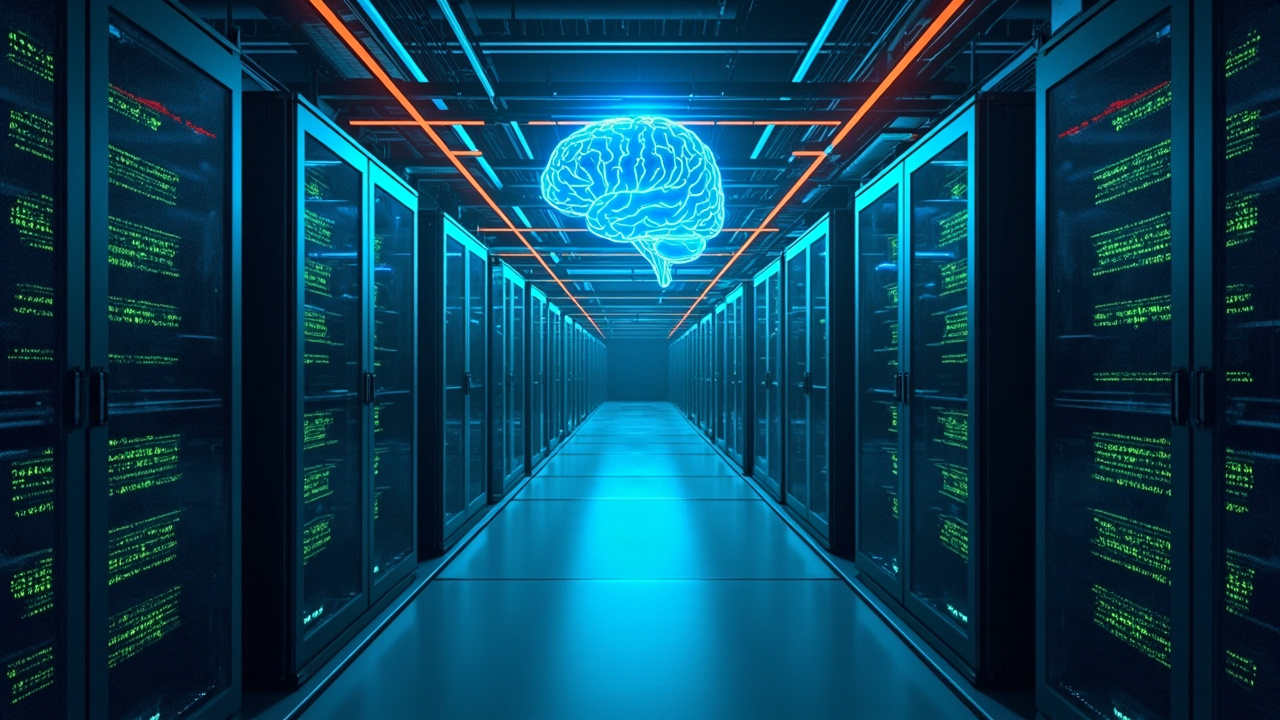
In late January 2026, SpaceX filed with the U.S. Federal Communications Commission for permission to deploy up to one million satellites in low Earth orbit. The filing — covered by the BBC, Reuters, SpaceNews, PCMag, and Ars Technica — asks the FCC to authorize a constellation whose purpose is to act as orbital data centers for AI.
Two quotes from the filing have echoed across the industry:
- These satellites are described as “the most efficient way to meet the accelerating demand for AI computing power.”
- They are framed as “a first step towards becoming a Kardashev II-level civilization — one that can harness the Sun’s full power.”
Why orbit? The case SpaceX is making
- Solar power, 24/7 — no grid, no PPA negotiations, no night-time intermittency.
- Passive vacuum cooling — no water chillers, the hardest piece of any ground-based AI facility.
- Abundant land-area equivalent — each satellite can carry large planar solar arrays; in space you don’t compete for acreage.
- Latency to user — closer to LEO users than transcontinental fiber for some workloads.
- Kardashev narrative — investors eat it up, and Musk is the only CEO who can credibly pitch it.
Why it’s hard (and why the bears are loud)
- Launch cadence — even Starship V3 won’t move a million satellites on a believable timeline.
- Hardware churn — GPUs in orbit can’t be swapped out; ground data centers refresh every 2-3 years.
- Bit-flips and radiation — Musk has argued neural nets are already resilient, but it’s a real engineering risk.
- Space debris — a constellation that big is a Kessler-syndrome magnet without rigorous deorbit plans.
- Capex — analyst chatter ranges $200B-$1T+ over a decade.
Whether you believe the orbital thesis or not, the strategic point stands: SpaceX is now the only company on Earth that controls the full stack — rockets, satellites, ground stations, GPU clusters, foundation models, and soon (it claims), orbital compute. That is a new shape for an AI company.

4. What This Means If You Build with AI
a) Compute pricing just got a new ceiling — and a new floor
Anthropic and Google just locked in long-dated compute at $1.25B/month and $920M/month respectively, at the high end of the market. That gives smaller labs a reference price for premium NVIDIA capacity going into late 2026. It also means the hyperscaler-vs-frontier-lab pricing war now has a third axis: vertically integrated owners of their own power + their own silicon neighbors.
b) Vendor concentration risk goes up
If you are a startup training on Anthropic, OpenAI, Google, or xAI APIs, nothing changes today. But under the hood, more of your inference and training is going to run on infrastructure owned by — or tightly contracted to — SpaceX. Single points of failure matter. Audit your providers’ sub-contracts.
c) “Sovereign AI compute” is now a real category
UAE, Saudi Arabia, France, and India have all announced national AI compute programs in 2025-2026. SpaceX’s pitch — “we own the rockets, the satellites, and the GPUs, you rent the rest” — is suddenly the most complete sovereignty package on offer. Expect government RFPs to start asking about orbital options within 18 months.
d) The agent story gets a logistics backbone
Agents that move money, book travel, or coordinate physical goods need low-latency inference plus edge delivery. A LEO constellation is the only realistic way to deliver sub-50ms inference to anywhere on Earth without massive ground fiber build-out. If SpaceX can deliver, agent products that depend on real-time world-knowledge (robotics, autonomous logistics, AR) get cheaper to run.
e) Your next funding round, in one paragraph
If you’re pitching an AI infra startup in 2026, the new benchmark is no longer “we beat NVIDIA on cost.” It’s “we beat SpaceX on cost, latency, or sovereignty.” Good luck.
5. Version Notes & Fact-Check
All figures cross-referenced against at least two independent outlets reporting June 11-13, 2026.
| Claim | Status | Sources |
|---|---|---|
| IPO date: Friday, June 12, 2026 | ✅ Confirmed | Reuters, WSJ, USA Today, CNBC, CNN, NBC |
| Ticker: SPCX (Nasdaq) | ✅ Confirmed | Multiple |
| IPO price: $135/share | ✅ Confirmed | Reuters, Yahoo, Investing.com |
| Day-1 close: $161.11 (+19.34%) | ✅ Confirmed | USA Today, Reuters, CNBC |
| Capital raised: $75B base, ~$86B with greenshoe | ✅ Confirmed | Multiple |
| Implied valuation: ~$2.1T | ✅ Confirmed | Reuters, Yahoo/CNBC |
| xAI merger: Closed February 2026 | ✅ Confirmed | NBC News, SatNews, Klover.ai |
| Anthropic deal: $1.25B/month for 36 months | ✅ Confirmed | S-1, Bloomberg, DCD |
| Google deal: ~$920M/month for ~110k GPUs | ✅ Confirmed | DCD citing SpaceX filing June 5, 2026 |
| Orbital data center filing: FCC, up to 1M satellites | ✅ Confirmed | BBC, Reuters, SpaceNews, FCC docket |
| Colossus 1 scale: 200,000 H100 GPUs | ✅ Confirmed | xAI.com |
| 2025 financials: $18.7B revenue, $4.9B net loss | ✅ Confirmed | S-1 |
| Kardashev II language: Direct quote in FCC filing | ✅ Confirmed | BBC, Semiwiki, USA Today |
Sources
- Reuters: “SpaceX IPO closes at $161.11” (June 12, 2026)
- USA Today: “SpaceX raises $75B in largest IPO ever” (June 12, 2026)
- WSJ: “SpaceX S-1 and AI pivot” (May 20, 2026)
- Yahoo Finance / CNBC: Day-one price action (June 12, 2026)
- NBC News, CNN Business: IPO coverage (June 12, 2026)
- Bloomberg: Anthropic $1.25B/month Colossus deal (June 2026)
- Data Center Dynamics: Google $920M/month GPU lease (June 5, 2026)
- BBC, Reuters, SpaceNews, PCMag, Ars Technica: FCC orbital filing (January 2026)
- xAI.com: Colossus 1 specifications
Related Articles

Anthropic Surpasses OpenAI: Inside the $965B AI Valuation Leap
From $380B to nearly $1 trillion in 90 days — a deep dive into the largest AI funding round in histo...

Anthropic's Historic IPO Filing: The $1 Trillion AI Race Heats Up
Anthropic filed its confidential S-1 on June 1, 2026, targeting a $1.75-1.8 trillion valuation and $...

SpaceX's $1.75 Trillion IPO: The Biggest in History --- and It's Really an AI Story
On June 4, 2026, SpaceX officially began its roadshow for the most consequential IPO in a generation...