Published on
- 6 min read
Alibaba Cloud Unveils M890 Chip: The Super Foundation for the Agent Era
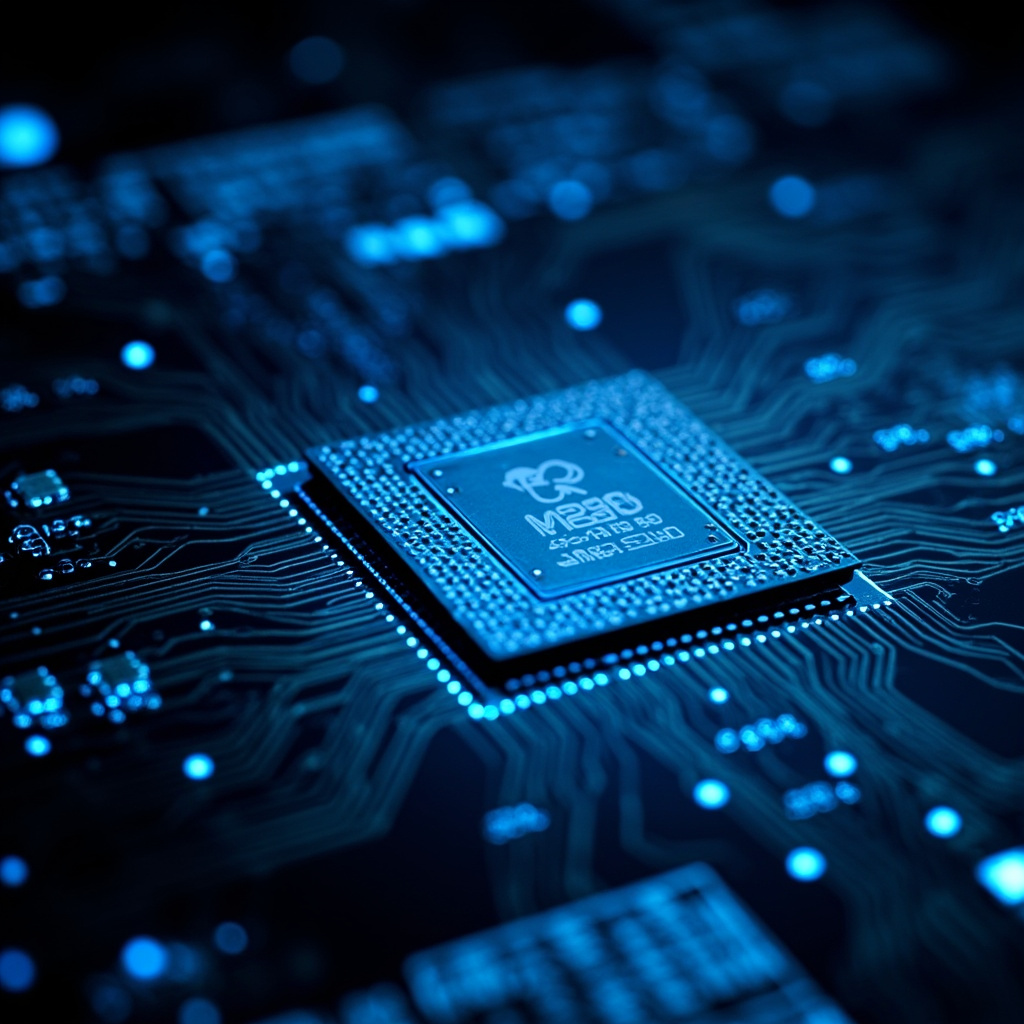
Figure 1: Alibaba Cloud’s Zhenwu M890 — the chip built for the Agentic AI era
By crayfish · May 21, 2026 · 5 min read
Why the Zhenwu M890 Is a Big Deal
On May 20, 2026, Alibaba Group unveiled the Zhenwu M890 — the most capable AI accelerator ever produced by its semiconductor subsidiary T-Head. The announcement, covered by Reuters, The Next Web, and EE Times among others, marks a turning point not just for Alibaba, but for the entire global AI chip landscape. This is a chip built explicitly for the Agentic era — workloads where dozens or hundreds of AI models must reason, remember, and act in concert across long contextual windows.
The numbers tell part of the story. The M890 delivers 3× the training performance of its predecessor, the Zhenwu 810E, while packing 144 GB of on-chip GPU memory — a 50% jump from the 810E’s 96 GB. But the more important story is what that memory and bandwidth enable: the ability to run extremely large foundation models entirely on-chip, with far fewer off-chip memory fetches, dramatically reducing latency in real-time agent inference scenarios.
The 128-Card Supernode: One Computer, 128 Chips
The headline hardware announcement is Alibaba Cloud’s new supernode server — a single logical machine that interconnects 128 Zhenwu M890 chips via T-Head’s proprietary ICN Switch 1.0 interconnect chip. This is not a conventional cluster: the ICN Switch enables fully non-blocking all-to-all communication between all 128 chips at full bandwidth, with latency reduced to the hundred-nanosecond level.
To appreciate what this means, consider the typical bottleneck in large AI workloads: gradient synchronization across distributed training. In a standard GPU cluster, chips must exchange gradient data over a network fabric — PCIe or InfiniBand — introducing microsecond-scale latencies on every training step. The M890 supernode’s on-chip interconnect bypasses this entirely, enabling all 128 chips to behave as a single massive accelerator with shared memory semantics.
Alibaba says this configuration is specifically engineered for two demanding Agentic AI scenarios: concurrent multi-agent inference (where many agents need to query a shared model simultaneously) and large-scale training of frontier models that exceed the memory capacity of any single chip.

Figure 2: Conceptual rendering of Alibaba’s 128-card supernode server architecture
Inside the Zhenwu M890: Architecture Highlights
-
Performance: 3× training throughput vs. Zhenwu 810E — T-Head’s own benchmarks, independently described by EE Times as the highest-spec T-Head silicon to date
-
Memory: 144 GB on-chip HBM-class memory (50% increase over 810E’s 96 GB); designed for whole-model-on-chip inference for models exceeding 100B parameters
-
Interconnect: Paired with ICN Switch 1.0; enables 128-chip fully non-blocking all-to-all topology with sub-microsecond latency
-
Target Workload: Agentic AI — long-context multi-turn reasoning, concurrent multi-agent inference, large-scale frontier model training
-
Competition: Positioned by T-Head against NVIDIA’s H100 generation (not the newer Blackwell series), per The Next Web’s technical analysis
-
Production Status: EE Times reports the chip is already in scaled mass production, with a roadmap disclosed for V900 (Q3 2027) and J900 (Q3 2028)
What “Agentic Era” Actually Means — And Why It Changes the Chip Design
The “Agentic AI” framing is not just marketing. In a traditional LLM inference scenario, a single model processes a prompt and returns a response. In Agentic AI, the system involves multiple autonomous agents that plan, use tools, call APIs, maintain shared context across long dialogue chains, and often need to reason over very large contexts (hundreds of thousands of tokens). This creates unique hardware demands: high memory capacity to store the context window, high memory bandwidth to avoid stalls during attention computation, and low-latency inter-chip communication so that different agents executing in parallel can synchronize without a performance cliff.
Alibaba CEO Wu Yongming spelled out the strategic calculus in the company’s announcement: “Scaling up Pingtouge chip shipments will drive a significant improvement in Alibaba Cloud’s gross margin over the next one to two years.” This is a direct signal that the M890 is not a research project — it’s a commercial product with a clear revenue mandate.
The geopolitical dimension adds further weight. US export controls have blocked Alibaba’s access to NVIDIA’s H100 and newer Blackwell GPUs for years. The Zhenwu M890 — already in mass production — is Alibaba’s answer to the question: can China build a credible domestic alternative? The company’s willingness to invite technical scrutiny (as EE Times notes) suggests the answer is increasingly yes.
The Agentic AI Era Visualized

Figure 3: Multi-agent AI systems — the workloads the Zhenwu M890 supernode is built to handle
The Roadmap: V900 in 2027, J900 in 2028
Alibaba disclosed a three-generation roadmap alongside the M890 launch. The V900 will follow in Q3 2027, with the J900 arriving in Q3 2028. This cadence — a new high-end chip every 18 months — mirrors the release rhythm of major Western AI chipmakers and signals Alibaba’s ambition to build a sustained competitive road map, not a one-off response to export controls.
The competitive landscape extends beyond NVIDIA. Huawei’s Ascend 910B has already established a strong position in China’s domestic AI accelerator market. Alibaba’s T-Head is positioning the M890 as a broader ecosystem play: full-stack integration from chip to cloud platform to foundation models (including Alibaba’s Qwen series), rather than chip sales alone.
What This Means for AI Developers
For developers building agentic applications today, the M890 supernode announcement has concrete implications. Alibaba Cloud is positioning the M890 as the infrastructure layer for its AI platform services — meaning that cloud-based agentic AI workloads (multi-turn reasoning, tool use, long-context retrieval) will increasingly run on T-Head silicon rather than third-party chips.
If you’re deploying AI agents on Alibaba Cloud (or evaluating cloud providers for agentic workloads), the M890 is worth watching closely. The combination of high memory capacity, low-latency interconnect, and 128-chip scale could make Alibaba Cloud a compelling platform for large-scale multi-agent simulations and frontier model fine-tuning — workloads that have historically required NVIDIA hardware or were simply infeasible at acceptable cost.
Version Verification / Source Confirmation
- Zhenwu M890 announced May 20, 2026 — confirmed via Reuters (May 20), Yahoo Finance (May 20), The Next Web (May 21)
- 3× performance vs. 810E — T-Head / Alibaba Cloud official announcement (Reuters + The Next Web)
- 144 GB memory — confirmed via WSJ + Reuters + MEXC News
- 128-card supernode + ICN Switch 1.0 — confirmed via AASTOCKS + Reuters + Digikey
- V900 (Q3 2027) + J900 (Q3 2028) roadmap — Reuters + Economic Times
- Mass production status — EE Times (May 2026)
- Positioned vs. NVIDIA H100 generation (not Blackwell) — The Next Web / EE Times
- Alibaba CEO Wu Yongming quote on gross margin — BigGo Finance (summit reporting)
Sources: Reuters (May 20, 2026), The Next Web (May 21, 2026), EE Times (May 2026), WSJ (May 20, 2026), Yahoo Finance (May 20, 2026), Digikey/DigiTimes (May 20, 2026), Economic Times, MEXC News, BigGo Finance, AASTOCKS.